Anthony Kila
Thanks to our general education in law, politics, and history, most of us are used to viewing the Constitution as a document that governs power and defines how government should operate, outlining what it can do and what it is not permitted to do. Starting with Aristotle, who in his “Politics” showed us that “A constitution (politeia) is the arrangement of magistracies in a state, especially the highest of all.”
So, with Vile, M.J.C.[1], we see that “constitution is a set of rules that seek to establish the duties, powers, and functions of the various institutions of government, regulate the relationships between them, and define the relationship between the state and the individual.” With A.V. Dicey[2], we understand that the “constitution is all the rules which directly or indirectly affect the distribution or the exercise of the sovereign power in the state.” With K.C. Wheare[3], we are told that “The constitution of a country is the whole system of government of a country, the collection of rules which establish and regulate or govern the government.” With J.W. Garner[4], “a constitution is the body of fundamental laws, written or unwritten, legal or unwritten, legal or extra-legal, which determines the organisation of the government, the distribution of powers, and the general principles under which the state is governed.” With William Wade & Christopher Forsyth[5], we see that “The constitution is the framework of rules and practices by which a government is run, whether codified in a single document or spread over various sources.”
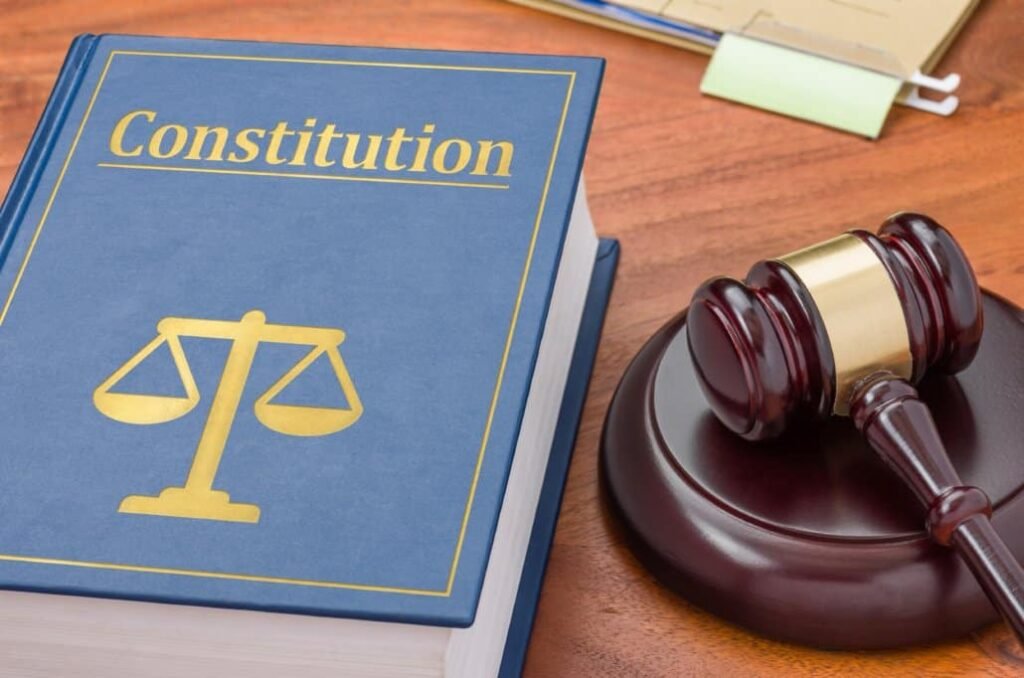
These definitions are fundamental, though not entirely sufficient. At its most noble and commendable conception, a constitution goes beyond merely being a legal document that regulates power or even sovereignty; it represents a social contract, serves as a political settlement, and most importantly, functions as a constructive compromise. “Constructive” as it is, the foundation upon which the desire to dwell together of different people is built. A “compromise”, as it is the new point reached after agreeing to trade off some items or principles for the benefit of the new construct. This constructive compromise, called the constitution, is akin to a masterful weaving together of diverse interests, core values, and visions into a unified and coherent framework designed to foster peaceful coexistence and advance collective progress.
In the realm of practical governance, it is exceedingly rare to find societies that are entirely homogeneous. Instead, most nations are characterised by a rich mosaic of diverse communities, each distinguished by their own unique histories, languages, religions, social classes, anxieties, constraints, as well as their social and political aspirations. As a result, the process of drafting and ratifying a constitution should be recognised not simply as a procedural or legal exercise, but rather as an intricate and sophisticated endeavour that necessitates inclusive negotiation. Such a process demands pragmatic strategies—approaches that are flexible and sensitive enough to accommodate and respect the multitude of varied identities, interests, and aspirations that are inherent within the social fabric of the nation.
A well-designed constitution does not depend on absolute unanimity among its constituent members; instead, it recognises and embraces a diversity of opinions, viewpoints, and perspectives. It refrains from seeking to eradicate disagreements entirely, but rather aims to manage and channel such differences in a manner that is constructive and conducive to societal progress. In this light, we should regard the constitution not as a static, immutable document—immovable and set in stone—but as a dynamic, living instrument that continually evolves. It reflects a series of numerous compromises, negotiations, and concessions that are fundamental to preserving social cohesion and harmony within the nation. Such an understanding underscores the importance of flexibility and adaptability in constitutional development, recognising that a healthy and resilient society thrives on the ability to accommodate differing viewpoints while maintaining an overarching sense of unity and purpose.
The efficacy of a constitution fundamentally depends on its capacity to strike a nuanced balance between establishing core foundational principles and addressing the demands of practical governance. Initially, it should serve to codify the fundamental values that a nation’s populace has collectively chosen to uphold, such as liberty, justice, fairness, and accountability. Concurrently, it must retain a sufficient degree of flexibility to adapt to the changing social and political landscapes that characterise its citizens’ evolving circumstances. This underlying principle explains why the most resilient and enduring constitutions are not merely static declarations of ideological doctrine; rather, they function as living, breathing frameworks that support continuous dialogue, negotiation, and reinterpretation within the society they govern, thereby ensuring their relevance and legitimacy over time.
The constitutions which endure and thrive over an extended period are generally those that are regarded as legitimate by the populace they serve. Such legitimacy is not necessarily derived from the constitution’s perfection or lack of flaws; rather, it originates from the inclusivity and fairness of the constitutional drafting processes. When all segments of society, irrespective of their prominence, wealth, or influence, believe that their viewpoints have been genuinely listened to and duly considered, the constitution is more likely to be met with authentic acceptance and support from the masses.
The British unwritten constitution, for instance, has withstood the test of time across several centuries not primarily due to meticulous initial planning, but rather owing to its exceptional capacity for flexibility and adaptability. Its enduring strength is fundamentally anchored in its ability to evolve in tandem with shifting societal values and circumstances. This evolution is often facilitated through established conventions and customary practices, which have gradually become embedded into the very fabric of the nation’s legal and political landscape, thereby ensuring its resilience and continuity over generations.
The post-apartheid constitution of South Africa has come to serve as a strong emblem of national renewal and a beacon of hope for the future. It was conceived directly in the aftermath of a period marked by deep social strife and concerted efforts to establish a new democratic framework. Its legitimacy is fundamentally anchored in the inclusive and participatory processes that engaged a broad spectrum of society, thereby guaranteeing that even those who had previously been marginalised possessed a voice in the shaping of the nation’s future. This foundational document not only signifies a legal and political milestone but also embodies the collective aspiration for unity, justice, and equality that define the principles upon which the nation strives to build its shared destiny.
When a constitution fails to fulfil its intended purpose, the cause is often not rooted in any fundamental flaws inherent within its articulated provisions. Instead, it more frequently stems from a lack of public trust, a deficiency in meaningful dialogue among stakeholders, and an absence of the necessary political will to uphold and genuinely embody its core principles. Furthermore, a constitution that employs language which fosters exclusion, imposition, or revenge is inevitably prone to transforming into a contentious arena of disputes and conflicts. Such a document is thus unlikely to serve as a proper foundation for societal progress, cohesion, and unity. Instead, it risks becoming a source of ongoing division and discord within the community.
In societies that are fragile or undergoing periods of transition, the difficulties faced are markedly heightened. The propensity to invoke constitutional authority as a means to manipulate or revise historical narratives often results in increased rigidity within the political landscape and may subsequently lead to heightened instability. Nonetheless, when leaders, citizens, and various stakeholders dedicate themselves to perceiving the constitution as a foundational framework for constructive compromise and consensus-building, there exists a significantly greater likelihood of establishing enduring institutions and cultivating a shared vision for the future. Such an approach underscores the vital importance of mutual understanding, dialogue, and collaborative effort in fostering resilient, inclusive, and sustainable societies.
Therefore, the paramount message of our era is unequivocal: we must approach the process of drafting and reforming our constitution not as an arena for assertion of dominance or conquest, but as a solemn civic ceremony founded on consensus, shared purpose, and mutual respect. It is only through cultivating a spirit of genuine dialogue, humility, and a profound sense of historical responsibility that a constitution can be truly transformed into a living, breathing instrument—one that fosters peace, sustains order, and guarantees justice for every member of society, regardless of their background or status.

It is important to consider that constitutions serve not only as a foundational framework delineating the distribution of power within a nation, but also as a reflective mirror that reveals the underlying character and values of that society. A society that demonstrates a capacity for constructive compromise does not exhibit weakness; rather, it exemplifies a profound form of wisdom and a dedicated commitment to the principles of unity and collective well-being. Such qualities are indispensable in the cultivation of a resilient and harmonious community, one in which diverse perspectives are not only acknowledged but actively valued and integrated for the overarching benefit of the nation. The capacity to balance differing interests through diplomacy and mutual understanding is a hallmark of a mature and stable society, underpinning enduring social cohesion and fostering an environment in which progress and stability can mutually flourish.
Footnotes
- M. J. C. Vile, 1967 “Constitutionalism and the Separation of Powers”, Oxford: Oxford University Press,
- Dicey, A. V., 1959 “Introduction to the Study of the Law of the Constitution” (10th ed.). London: Macmillan Education Ltd.
- K. C. Wheare, 1951, “Modern constitutions”, Oxford University Press edition.
- James Wilford Garner. 1928 "Political Science and Government, New York: American Book Company.
- William Wade & Christopher Forsyth 2014 “Administrative Law” Oxford University Press
Anthony Kila
A renowned essayist, jurist, and political economist, Anthony Kila is a Jean Monnet Professor of Strategy and Development at the Commonwealth Institute of Advanced and Professional Studies. His books on constitutions published by CIAPS Press include:
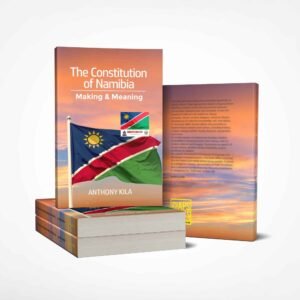
The Constitution of Namibia: Making and Meaning
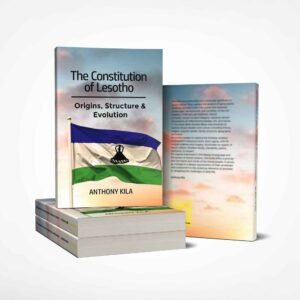
The Constitution of Lesotho: Origin, Structure, and Evolution
The Constitution of Eswatini: Panorama of a Paradoxical Promise